Making Money When Your Customers Lose
Happy Wednesday, Fintech Takers!
I hope your week is going well.
Mine has been interrupted by the re-emergence of wasps in Montana.
I guess this happens every year, around this time, as the weather gets warmer. However, if you’re familiar with my recent history, you will know why this development has put me on edge.
Plus, one of them just stung my wife while she was driving in the car, which is utterly uncalled for. I may be going back to war. I’ll keep you posted.
And speaking of going to war, today’s podcast is on a topic that has become my own personal hill that I will die on — sports betting and its infiltration into fintech.
I really enjoyed (and was mildly enraged) by the conversation. I hope you will be too!
– Alex
P.S. — Me and TruStage are hosting a lending-themed AMA on Thursday and there's still time to get your questions in. Rates, credit conditions, AI reshaping the workforce, there's no shortage of topics to choose from.
We go live tomorrow, May 14th and I want to work through whatever's on your mind. Your seat's still open, grab it.
3 BIG IDEAS FROM THE PODCAST
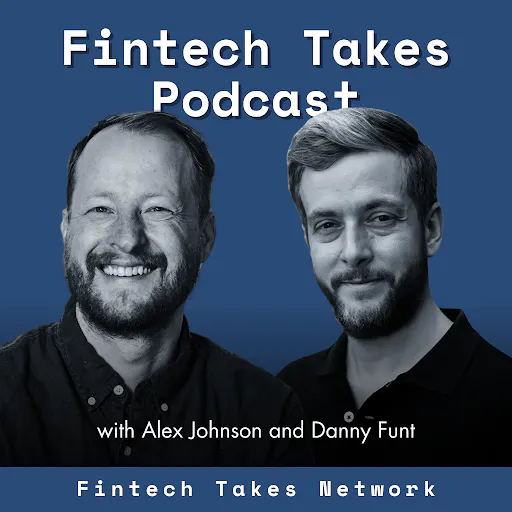
This week on Fintech Takes, I sat down with Danny Funt, author of Everybody Loses: The Tumultuous Rise of American Sports Gambling, for a clarifying conversation on a topic that you, dear reader, already know that I can't stop thinking, writing, and podcasting about: the collision of gambling and financial services.
Danny’s book is spectacular. If you work in consumer finance, you'll read it with a growing and uncomfortable sense of recognition.
Tune in for the full conversation here
And read below for my three big ideas...
1. The Law Everyone Got WrongCopy anchor linkCopied
In 2018, the Supreme Court did not legalize sports betting.
That distinction sounds pedantic, but it’s not. What the court did instead was strike down one specific law, the Professional and Amateur Sports Protection Act (PASPA), thanks to the 10th Amendment.
PASPA didn't simply prohibit gambling. It blocked states from repealing their own existing prohibitions on gambling. You can do the first thing under the Commerce Clause, but the second crosses a constitutional line the court wasn’t willing to accept.
Congress could’ve passed a replacement federal ban the next day, but it didn’t. The professional sports leagues promptly declared that a new reality had been handed to them and they had no choice but to adapt.
The audacity of that framing is what Danny's book documents in exquisitely-sourced detail.
The MLB and the NBA had been meeting privately with gambling operators for years through a shared lobbying firm before the final decision. The same professional sports leagues that had described gambling as "an evil" and "the deadliest possible thing that would happen to sports" were simultaneously planning how to monetize an outcome that they were still publicly against.
However, when the Supreme Court ruled against PASPA and cleared the way for states to legalize sports betting, the leagues quickly helped execute the lobbying campaign for legislation that FanDuel and DraftKings had drafted. State legislators who might have otherwise evaluated the legislation objectively, were instead quickly won over after attending games in luxury suites and having dinner with their childhood sports heroes. The chief lobbyist running this operation, speaking to Danny for the book, described lawmakers as "kids in a candy store."
He said that to a reporter. For said reporter’s book.
Rob Manfred, commissioner of Major League Baseball, recently said his league was "dragged" into sports betting. Danny's reporting vehemently disagrees.
🎬 DIRECTOR'S COMMENTARY
A wild fact about Murphy v. National Collegiate Athletic Association (the Supreme Court case that overturned PASPA) is that the vote was 7-2.
The conservatives on the court were joined by Elena Kagan and Stephen Breyer, which tells you just how messed up, constitutionally speaking, PASPA was.
I suspect that if the Justices could get a do-over on Murphy, knowing how it played out, at least a few of them would switch sides.
2. Making Money When Your Customers LoseCopy anchor linkCopied
Financial services has strict rules for when and how a broker can get paid for steering you towards a specific financial product.
Sports media has none.
Here’s how the revenue share affiliate model in sports betting works for one publication.
The Action Network creates authoritative, statistics-driven sports and sports betting content. When a reader clicks a link in an ad from a sports betting app and signs up for an account, the affiliate collects a cut of that customer's lifetime losses, sometimes as high as 45%. Action Network’s interim CEO, writing in Slate, described this revenue stream by saying, and I quote, "happy fucking birthday."
Action Network's content now runs in the New York Post, the Philadelphia Inquirer, and dozens of other traditional media properties. Any link in sports media content that routes you to a sportsbook almost certainly sits on top of some version of this arrangement.
It’s hard to even come up with a financial services equivalent to this model, but imagine discovering that NerdWallet was collecting a percentage of the revolving interest you paid on every credit card it had recommended.
It’s outrageous to think about, but that’s exactly how the monetization model for Action Network works.
And the crazy thing is that the model doesn't require Action Network to deliberately give out bad picks. The odds are already stacked in the sportsbook's favor. Danny cites the figure that something like one in 100 bettors actually win. An affiliate can be completely earnest, try its absolute best to give accurate information, and still hold a direct financial interest in its audience losing money.
3. When Will Meaningful Consumer Protection Arrive?Copy anchor linkCopied
Policymakers have spent many many decades building and refining a consumer protection framework for financial services.
Sports betting has spent the last eight years avoiding one.
The VIP host programs Danny describes would be immediately actionable under financial services law if a bank ran something equivalent. A relationship manager compensated based on how much a client lost, or trained to nudge that client back into activity when they slowed down.
In consumer finance, that’s unthinkable. In sports betting, it’s standard operating procedure.
The "responsible gambling" infrastructure that exists today is largely self-regulated and built by the same industry it is supposed to constrain. It doesn’t work very well and the industry knows that reform is coming. Danny's belief is that they’re squeezing as much milk out of the cow as possible before it arrives.
The regulatory gap persists, in part, because gambling regulation has been a state-level function, and states now flush with tax revenue from legalized sports betting have limited appetite to constrain the source of that revenue.
This rhymes with financial services, which has a similarly complex relationship with federalism and consumer protection regulation.
The difference is that we’ve had decades and decades of consumer harm caused by financial services companies to teach us why and how our industry needs to be regulated. Sports betting, by contrast, is brand new in the U.S. We don’t even have one decade of experience to learn from.
And yet, evidence of consumer harm from sports betting is already piling up. How much longer until we reach a critical break point?
WHAT I'M LISTENING TO
#1: Inside the Next Chapter of Payments: Policy, Fintech and Innovation (Social Currency) 🎧Copy anchor linkCopied
How is it possible that I keep discovering new fintech podcasts that I hadn’t heard of before, even though they have excellent hosts and excellent guests?
How does this keep happening? How is there so much good fintech content?
Anyway … add Social Currency to your list. You’ll be glad you did!
#2: Nick Offerman (Good Hang) 🎧Copy anchor linkCopied
Look, if Ron and Leslie are going to do a podcast together, I’m going to listen to it and I’m going to recommend it in the newsletter, even though it has absolutely nothing to do with fintech.
I don’t make the rules.
*Bonus: Banking on Primacy, Episode 1: The Fight for Primacy (by me, with Chime) 🎧Copy anchor linkCopied
Kicked off a new miniseries on the most important question in consumer finance right now: what does it take to win a primary relationship in 2026? Episode 1 with Chime President Mark Troughton gets into account opening numbers, what trust looks like without branches, and the hierarchy of consumer financial needs. Listen here.
*This rec is brought to you by one of our fantastic brand partners.
Thanks for the read! Let me know what you thought by replying back to this email.
— Alex