Open Banking in the Upside-Down
3 BIG IDEAS FROM THE PODCAST
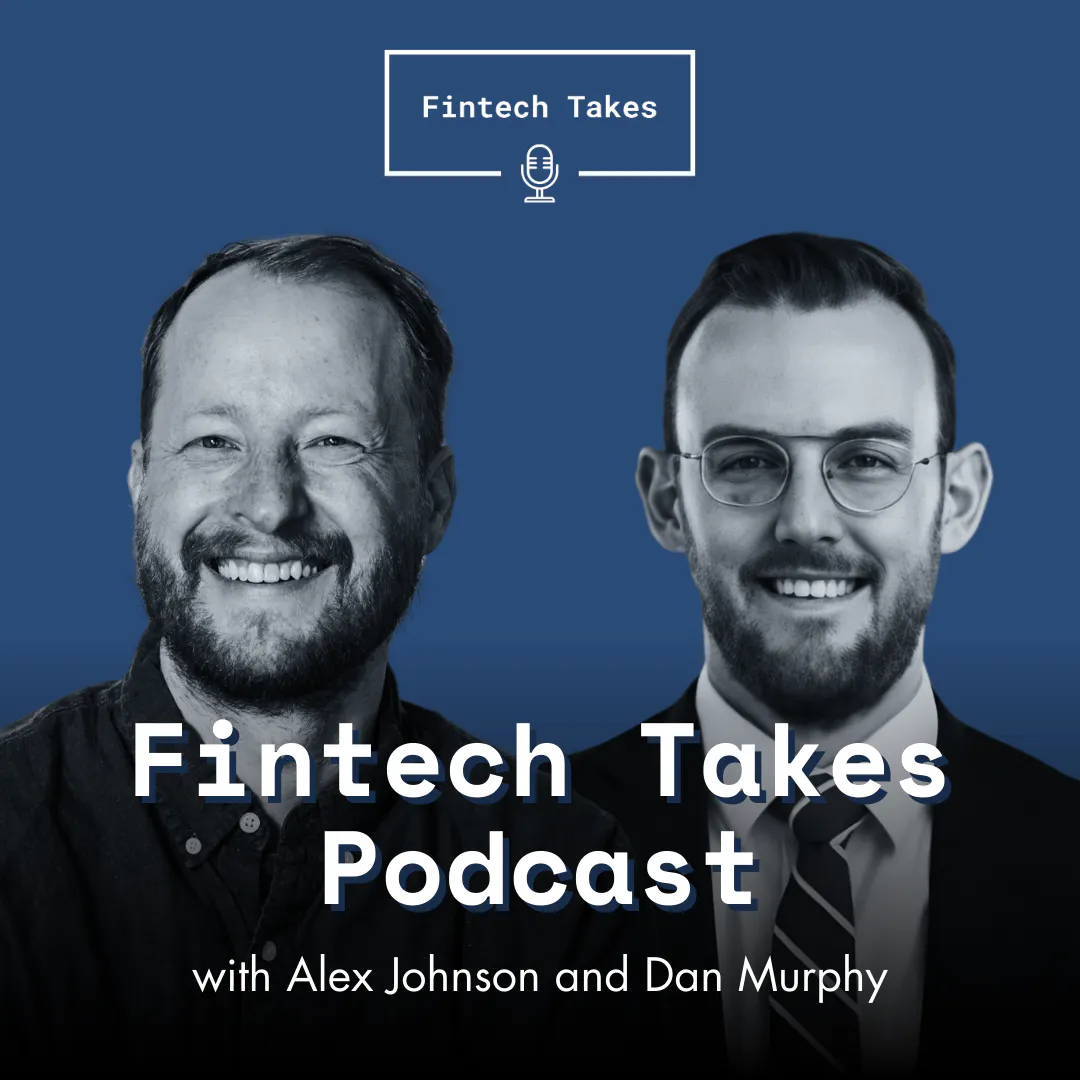
This week’s episode of the Fintech Takes podcast is one of my favorites, ever.
Dan Murphy (who helped write the CFPB’s current open banking rule) joined me to unpack how we got here: lawsuits, motions to vacate, surprise fees, motions to stay, and why a single word in Section 1033 of Dodd-Frank is so important.
Tune in for the full conversation here
And read below for my three big ideas...
#1: When Regulators Step Back, The Market Steps InCopy anchor linkCopied
A quick history tour, if you’re just tuning in (and even if you aren’t):
The CFPB spent years creating its open banking rule — across administrations, a SBREFA panel with small banks and fintech startups, and 11,000+ comment letters (many 50–100 pages long). In October 2024, it finalized the rule.
Hours later, the Bank Policy Institute sued, claiming the bureau didn’t even have the authority to write the rule.
Then came the real shock: the Trump CFPB agreed with BPI and asked the court to vacate its own rule! As I describe in the podcast, it was like watching a performance art piece of smashing a government agency with a sledgehammer.
But when the referee walks off the field, the game doesn’t stop.
JPMorgan Chase stepped in, invoked a specific clause in its data access agreements with the aggregators, and imposed fees (even though the current final rule, which bans data providers from charging fees, was in effect at that point).
Policy migrated from regulation to private contracts, where the massive leverage wielded by one bank overpowered everything else.
Until the refs ran back onto the field …
#2: JPMorgan Chase Almost Had ItCopy anchor linkCopied
JPMC almost had it. The CFPB was on its side. The current open banking rule was likely on its way to being vacated. And who knows when a new rule would have been implemented?
All the bank had to do was wait.
But it didn’t. Instead, it chose to jump the gun, and to do so aggressively.
It introduced extremely high fees, clearly aimed at hampering or killing pay by bank, even though the rule that was in effect at the time said (and I’m going to keep on repeating this), no fees.
The move backfired. It united unlikely allies (crypto companies, merchants, consumer advocates); groups that don’t always agree on things, and quite often strongly disagree, but who all saw the fees as absolutely anti-competitive.
Crypto’s involvement mattered most. As Dan noted, the Trump White House has “some hurt feelings about Chase in general” and listens closely to crypto advocates. Within weeks, the CFPB reversed course again — this time asking the court to preserve the rule it had just tried to kill.
JPMC probably thought it was wresting back control over its data. What it actually did was hand its opponents the perfect rallying cry: proof that, left unchecked, incumbents will exercise their market power in extreme and potentially harmful ways.
#3: The U.S. Data Rights ProblemCopy anchor linkCopied
Everything in this fight keeps circling back to one word in Section 1033: “agent.”
When Dodd-Frank was written in 2010, the rule seemed to acknowledge an obvious, on-the-ground truth: third parties were already accessing bank data on behalf of consumers. In other words, they were acting as “agents” of the consumers.
But since then, that single word — agent — has carried the weight of the entire debate.
Now, to be fair, the Biden-era CFPB’s interpretation of the principal-agent relationship, in an open banking context, was strict: an authorized third party is the consumer’s representative, acting only for the consumer and only for the specific purposes the consumer authorizes.
That’s why the final rule clamped down on secondary use: authorizations must be specific, they must expire, they can be revoked, and the data can’t be recycled into any credit-bureau-style secondary products.
Fintech companies and data aggregators pushed for broader datasets (payroll, mortgages, auto loans) and more freedom to reuse data once they had it.
Banks (by which I mostly mean JPMC, PNC, and a few other large banks) wanted the CFPB to go much further. They wanted the bureau to dispense entirely with the notion of APIs and consumer-permissioned third-party data access. They wanted open banking to be defined, narrowly, as the ability for consumers to personally download their banking data and take it with them.
But the Biden-era CFPB’s posture wasn’t about picking winners; it was a workaround for a bigger void.
That bigger void is this: unlike Europe, the U.S. has no national data privacy law. Which means open banking has, in some ways, been forced to serve as the country’s de facto consumer data rights regime.
That’s why these fights feel existential. A rule meant for “read-only” bank account access is now doubling as a referendum on privacy and personal rights in the digital economy.
Until we establish a true privacy framework in the U.S. — or even a dedicated digital economy regulator, a “CFPB for data” (in Dan’s words) — open banking will continue to struggle to hold up under the weight of problems it was never intended to solve.
WHAT I'M LISTENING TO
#1: How the Transcontinental Railroads Built the Modern World (Plain English) 🎧Copy anchor linkCopied
I love it when Plain English intersects with American history. The parallels between the railroad boom of the 1800s and the current AI buildout are deeply interesting.
#2: Robinhood CEO Vlad Tenev on tokenizing private companies, changing the SEC, and Frank Slootman (The Cheeky Pint) 🎧Copy anchor linkCopied
I agreed with very little of what Vlad said in this interview (unsurprisingly), but it’s always good to listen to people you disagree with. And the format of this new podcast from Stripe (including the beer and the fake bar setting) is excellent.
WHERE I'LL BE
September. My god in heaven. Tell my family I love them.
(If you’ll be at any of these shows, hit me up!)
✈️ Symposium on Agentic AI & Consumer Payments | 9/8 - 9/9 | Washington D.C.Copy anchor linkCopied
Put on by my friends at the Consumer Bankers Association. I look forward to learning more about a topic that fascinates me.
✈️ FinovateFall | 9/8 - 9/10 | New YorkCopy anchor linkCopied
I’ll be giving a 7-minute presentation on a trend in financial services that banks and fintech companies should be thinking about. I’ve done this specific session before, and it’s more difficult than it sounds. Looking forward to the challenge!
✈️ Cash Flow Underwriting Summit | 9/10 | New YorkCopy anchor linkCopied
I’ll be doing A LOT at this event, which is fortunate as I am OBSESSED with cash flow underwriting, as you have probably noticed!
✈️ Money Experience Summit | 9/15 - 9/17 | Salt LakeCopy anchor linkCopied
One of my favorites. I never miss it. My panel this year should be a lot of fun!
✈️ Salt Flats Summit | 9/17 - 9/18 | Salt LakeCopy anchor linkCopied
Truly one of the most unique events I’ve ever attended. Looking forward to year 2!
✈️ AI-Native Banking & Fintech Conference | 9/30 | Salt LakeCopy anchor linkCopied
Year 2 for this one as well. The first one was a lot of fun (plus, I’m digging all these conferences in my backyard … Silicon Slopes for the win!)
Thanks for the read! Let me know what you thought by replying back to this email.
— Alex